A video arrives at eleven at night: smoke over a street you don't recognise, shouting somewhere off camera, a caption that says "breaking". It already has forty thousand shares. By morning it will be in three group chats, and someone's uncle will have explained what it "really" shows. Maybe it does show that. Maybe it shows something that happened four years ago, eight hundred kilometres away, with the sound from a different clip entirely.
Conflict footage is the hardest material on the internet to read, because the people closest to it are often the least able to check it, and the people sharing it fastest are often the furthest away. You don't need a newsroom to do better. You need twenty minutes, a few habits, and the willingness to say "I don't know yet" out loud. Here is the routine.
Start with the account, not the footage
The clip is the last thing to look at. First, look at who put it in front of you. Open the profile. When was the account created? What did it post last month, and the month before? A page that existed solely to post one dramatic video, created days ago, is not a source. Neither is an aggregator that reposts everything it can find in six languages with the same breathless caption.
Then ask the question that trips up most people: is this the original uploader, or the fifty-eighth relay? Search a distinctive phrase from the caption in quotation marks, and sort by date rather than relevance. You are hunting for the earliest appearance. If the trail ends at a large verified news organisation, good. If it ends at a TikTok with a spinning logo and no caption, you have found the beginning of a rumour, not the beginning of an event.
Read the upload history, not just the bio
Bios lie cheaply. Posting histories are harder to fake. Scroll back. Does the account post from one place, or from everywhere at once? Does it credit anyone? Does it ever correct itself? An account that has been right about small things for two years is worth more than one that has been loud about big things for two weeks.
Where is this, and when was it filmed?
Two questions, and they do most of the work. In conflict footage the location often gives away whether the clip is even relevant to the war being described.
Place
Watch for shop signs, street names, license plates, the language on a bus, a distinctive roof, the shape of a mountain ridge, railway signals, the colour of a taxi. Pause and read. Then compare: satellite imagery of the city you suspect, street-level photographs, images posted by local journalists. Weather helps too — if the caption claims a place in high summer and the trees are bare, something is wrong.
Time
Look for things that date themselves: a poster for an event, a building that was destroyed last spring, the state of the foliage, snow, harvest, clothing, a scoreboard on a bar television. Shadows matter. Long shadows mean early or late in the day; if the caption says noon and the shadows run across the street, the caption is guessing.
If a clip is old, someone has usually said so already. Search the place name plus a plain description — "street market shelling" — and look at the dates on results from local outlets.
Metadata is a clue, not a verdict
Files carry traces: creation dates, resolution, the software used to edit them, sometimes the device. When you can see them, treat them as hints. A creation date can be edited. A missing date means nothing, because every social platform strips metadata on upload anyway — its absence is normal, not suspicious.
More useful are the things inside the picture. A clock on a wall. A timestamp burned into the corner by a camera, which should match the claimed date, and often doesn't. A frame rate that jumps. A watermark from a channel that no longer exists. If a clip is a screen recording of another clip — you can often see a progress bar or the edge of a phone interface — ask why nobody has the original.
What's outside the frame
A crop is an argument. Vertical crops made for phones slice away the wide shot, and the wide shot is where the crowd stands calmly filming, where the second camera crew is visible, where the street turns out to be a film set or a wedding. Ask what the person holding the camera can see that you can't. Ask why they are calm when the caption says massacre, or why they are running when the caption says celebration.
Sound deserves its own suspicion. Audio is added, swapped and removed all the time. Explosions get pasted under silent footage; music gets laid over real footage to change its meaning; a well-known clip from one conflict gets a new soundtrack from another. Watch once with the sound off. Then listen for sounds that don't belong to the picture — a crowd when nobody's mouth is moving, an explosion whose flash never appears on a reflective surface.
The minutes around the clip
Almost every misleading clip is a fragment. Something happened before, something happened after, and both were removed. Look for the longer version, an alternate angle, a second camera from the same street. Multiple angles are the single best evidence that an event occurred where and when people say it did.
Also check the seams. Speed changes, jump cuts, a sudden zoom to hide an edit. Footage from military simulation games has circulated as real combat more than once — look for unnaturally clean textures, repeating figures, physics that look slightly weightless.
Red flags that should slow you down
- No original uploader anywhere in the chain, only relays.
- A caption that names a place the footage never shows.
- Audio that is louder, cleaner or more dramatic than the image.
- An account created recently, posting only this conflict, in several languages.
- Numbers in the caption with no source and no way to check them.
- Emotional instructions — "share before it's deleted", "nobody is talking about this".
- Comments full of people asking, politely, where this is, and getting no answer.
The ten questions
- Who posted this first, and can I find the original upload?
- When was that account created, and what else has it posted?
- Can I name the street, building or landscape — and does the caption agree?
- Do the weather, clothing, foliage and shadows fit the date claimed?
- Has an older version of this appeared somewhere else?
- Is there a longer version, or a second angle from another camera?
- Does the sound match the picture, and the picture the caption?
- Are there visible edits, speed changes or a screen-recording interface?
- Are local journalists, residents or established outlets reporting the same event?
- What, exactly, would I be telling people if I shared this right now?
When the answer is still "I don't know"
Uncertainty is a legitimate finding. You do not have to resolve a video to be responsible with it. If you have checked the source, found nothing, and the clip still matters, say so plainly: "This is circulating; I haven't been able to confirm where or when it was filmed." That single sentence is more honest than a confident caption, and it invites someone with better information to reply.
Two more things. Think about the people in the footage. Families of the dead and the missing scroll the same feeds you do, and a mislabelled clip can put a stranger's worst day in front of the wrong audience, permanently. And remember that a video is evidence for a claim, not proof of the most dramatic version of it. A clip can be entirely real and still be described falsely.
The habit worth building is small: pause once, before you tap share, and ask where, when and who. Not every time, and not perfectly. Just often enough that the next video at eleven at night waits a few minutes before it goes any further.
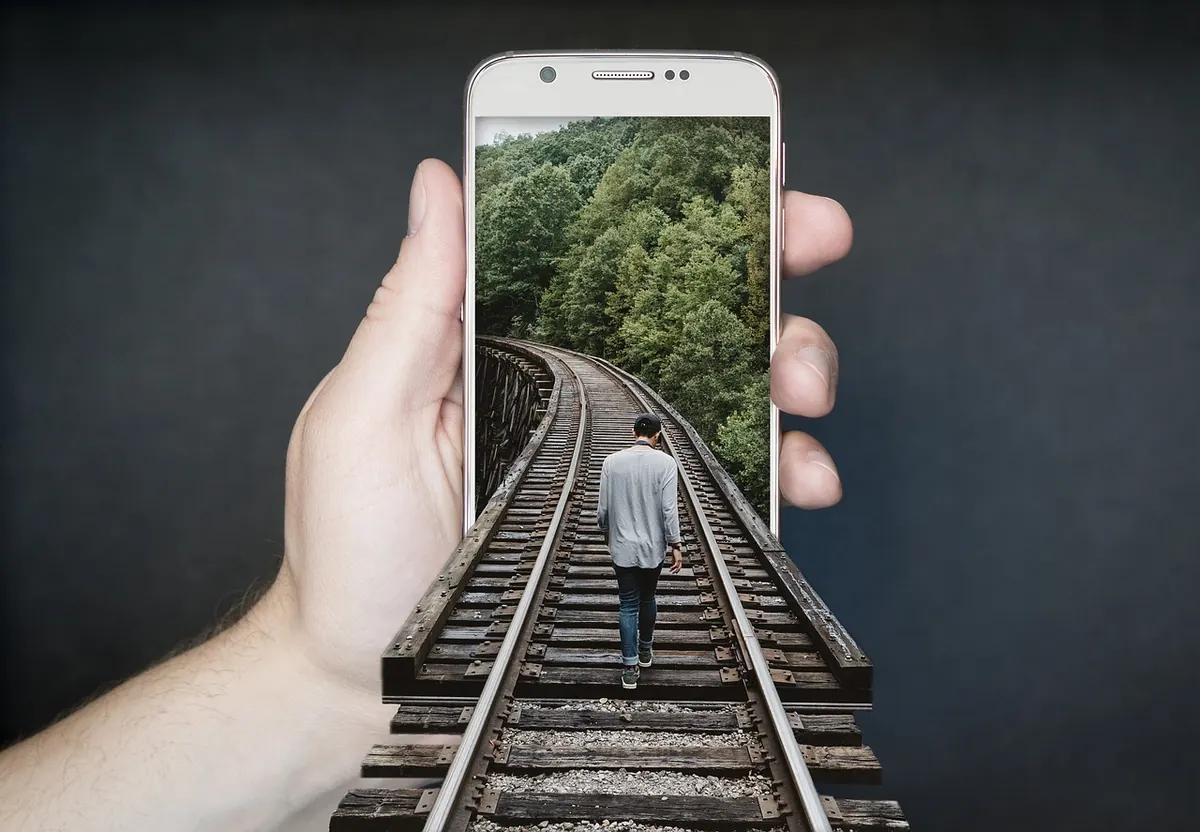
Photo: FunkyFocus / Pixabay