It is one of the most reliable pairings in economics, and one of the least explained to the people who pay for it. A country's currency slides against the dollar. Within weeks, the price of bread, cooking oil, chicken and cooking fuel starts climbing in shops far from any bank or trading desk. The two events are not a coincidence, and they are not simply "inflation" arriving from nowhere. They are connected by a chain with four or five distinct links, each with its own lag, its own middlemen, and its own political flashpoints.
Understanding that chain is useful whether you run a household, a small shop or a ministry. It tells you which prices move first, which ones move last, and why some countries absorb a currency shock in months while others spend years working through it.
The short version: four links, five lags
A currency depreciation does not make food expensive by itself. It makes imports expensive in local money, and in countries that depend on imports for a large share of their calories, imports are the food supply.
The chain runs roughly like this: the exchange rate moves, the local-currency cost of a shipment rises, importers and banks reprice or ration foreign currency, wholesalers and transporters pass on the higher cost, and finally retailers adjust shelf prices. Governments sit somewhere in the middle, deciding through subsidies how much of the shock reaches the plate. Every link takes time. That is why the currency chart often looks calm while the market is still climbing.
Link one: the import bill gets heavier
Start with the arithmetic. If a country's currency falls by a third against the dollar and the world price of wheat is unchanged, the same tonne of wheat costs about a third more in local currency. Nothing has happened to global supply. The country has simply become poorer relative to the things it buys abroad.
What matters then is what the country buys. For most import-dependent economies the list is long and unglamorous: wheat and rice, cooking oil, sugar, dairy, fuel, fertiliser, animal feed, pharmaceutical inputs, plastic resin for packaging, spare parts for mills and trucks. Bread is the classic case, but the exposure runs deeper than the bakery. Chicken is partly an imported product because the feed is imported. Cooking oil is often pressed locally from imported seed or crude oil. Even locally grown staples feel it, because they compete with imported alternatives and because the fertiliser that grew them was priced in dollars.
When importers cannot get dollars at all
Price is only half the story. In a sharp crisis, the bigger problem is access. Banks run short of hard currency, importers queue for letters of credit, and the central bank starts rationing. At that point food does not get more expensive so much as it disappears from shelves. Egypt, Pakistan and Nigeria have all spent stretches of the past few years managing which imports got priority access to dollars, and the gap between the official rate and the street rate became a business of its own. Whenever two exchange rates exist, somebody is making money from the difference, and the shopkeeper usually pays for it.
Link two: the middle of the chain, and what it adds
Between the port and the shelf sits a layer of costs that most consumers never see, and almost all of them are dollar-linked in a crisis. These typically include:
- Fuel and transport. Diesel is often priced off import costs, and getting a sack of flour from port to town is a fuel purchase.
- Packaging. Plastic film, bottles, cans and cartons depend on imported resin, tinplate or paper.
- Machinery and spares. A broken mill bearing is not negotiable; it is bought in hard currency or the mill stops.
- Credit. Central banks raise interest rates to defend the currency, which makes working capital more expensive for traders holding stock.
- Insurance and freight. Both are usually denominated in dollars, and both rise when shipping is disrupted.
Firms absorb some of this by squeezing margins. Then they absorb the rest by changing the product: smaller loaves, thinner packaging, cheaper blends, fewer lines on the shelf. Shrinkflation is not a trick invented by marketers; it is often the last resort of a business whose input costs have jumped faster than its customers' wages.
Link three: subsidies decide who feels it
This is where the politics enters, and where two countries with similar currencies can end up with very different bread prices. A government that subsidises wheat, fuel or bread is effectively fixing the local price of an imported good. When the currency falls, the subsidy bill in local money rises even if the dollar cost stays flat. The government then faces a narrow set of options: borrow more, tax something else, cut the subsidy, or shrink it quietly by letting inflation erode its value.
The quiet option is the most common. A subsidy held flat in nominal terms buys less every month, and the gap shows up as a thinner loaf or a longer queue. When governments finally move to explicit reform, it usually comes shortly after a devaluation, because that is the moment the bill becomes impossible to hide. Public anger at "sudden" price rises often reflects a shock that was building for a year in the budget.
What recent crises showed
No two episodes are identical, but the sequence repeats with almost mechanical regularity:
- Sri Lanka, 2022. A collapsing rupee, scarce fuel and rationed imports turned a balance-of-payments problem into a food and cooking-gas crisis within months.
- Lebanon, from 2019. The pound lost most of its value, the wheat import chain depended on scarce dollars, and bread became a daily political argument.
- Egypt, 2022 to 2024. Successive devaluations raised the local cost of imported wheat and fuel, and subsidy reform followed, with bread and fuel prices converging upward.
- Nigeria, 2023 onward. Unifying the exchange rate and removing a fuel subsidy lifted both import costs and transport costs at once, and food prices climbed well after the naira steadied.
- Ghana, 2022. A sharp cedi depreciation fed through into imported fuel, wheat and fertiliser, pushing food inflation above the headline rate.
- Turkey, 2021 to 2023. A lira slide combined with unconventional monetary policy produced one of the clearest examples of currency-driven food inflation in recent years.
Read together, they suggest a rule of thumb: the more of a country's calorie supply crosses a border, and the thinner its hard-currency reserves, the faster the pass-through.
Why the pain outlasts the currency chart
Currencies sometimes recover on paper long before prices come down. Economists call the pattern "rockets and feathers" — prices rise fast and fall slowly. There are ordinary reasons for it. Firms that spent a year absorbing losses are in no hurry to cut when costs ease. Contracts and wages have already been renegotiated. Expectations have shifted, and everyone from the miller to the farmer has learned to price in the next shock.
Farmers face a slower cycle still. Fertiliser bought at the worst possible exchange rate shapes the cost of a harvest planted months later, so a currency crisis can raise food costs for two or three seasons. Meanwhile the official inflation basket, which is an average, tends to understate what a poor household actually buys, because that household spends a larger share of its income on exactly the items the currency shock hits hardest.
What to watch, and what households can do
If you want to see food prices before they arrive, watch the plumbing rather than the headlines:
- The gap between the official and parallel exchange rate. A widening spread signals rationing to come.
- Central bank reserves and any new rules on import licences or letters of credit.
- Announcements on fuel and bread subsidies, which usually precede shelf changes.
- Wholesale prices at ports and mills, which move before retail.
- The price of fertiliser and diesel, the two inputs that shape the next harvest.
For households, the practical moves are modest but real. Keep a simple monthly record of ten staple items you actually buy, so you can tell a genuine shift from a bad week. Learn which items in your basket are import-linked and which are not; local, seasonal produce and unprocessed staples are usually less exposed than packaged and branded goods. Buy in bulk where storage allows and where it genuinely saves money, but avoid panic stockpiling, which pushes prices up for everyone including you. If you run a small business, shorten contract terms and be explicit about which currency your inputs are priced in.
None of this softens a currency crisis. But the chain from exchange rate to dinner plate is predictable, and people who can see the links coming make better decisions than those who only see the bill. For anything involving borrowing, savings or contracts, a conversation with a qualified financial adviser is worth more than any general rule.
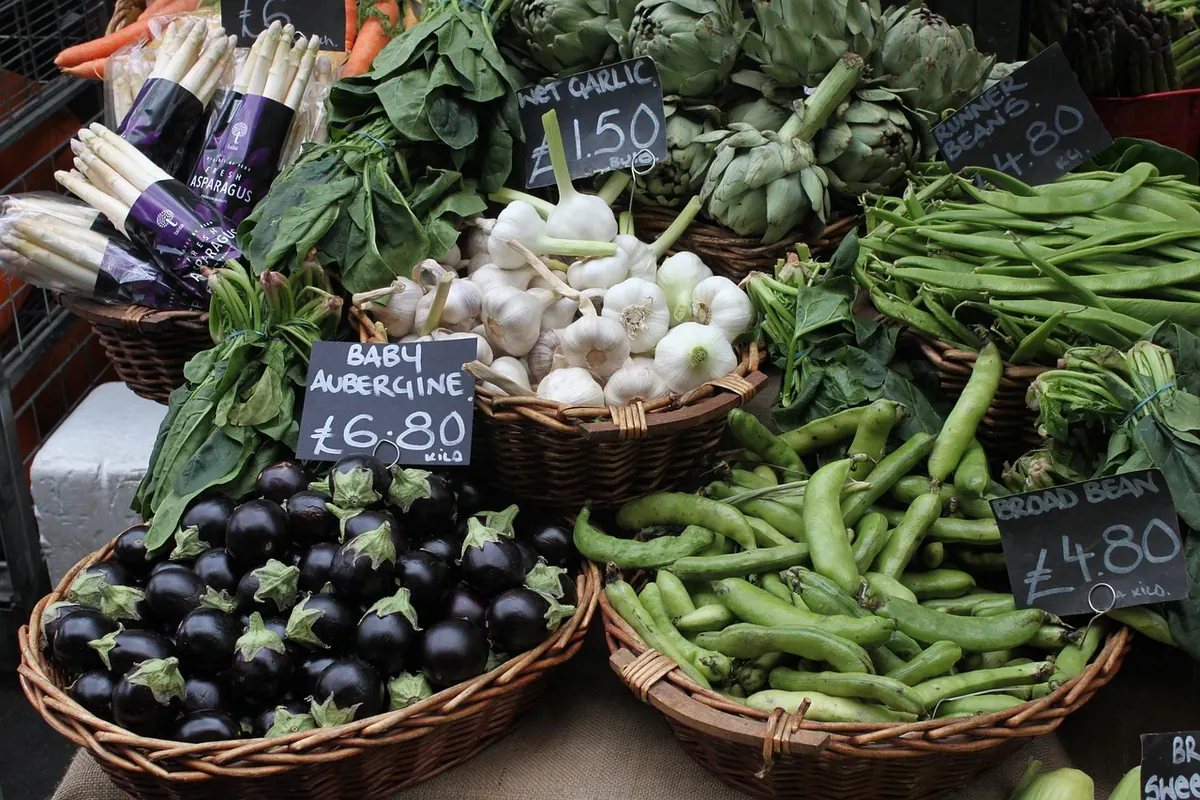
Photo: JaHo / Pixabay