The storm hit at four in the morning, and by six the hotel lobby was full of people refreshing their phones. The English-language feeds carried one line: flooding in the region. The local paper carried twelve. Which roads were shut, which bridge had been closed since the previous evening, which villages had lost power, which school gym was taking people in. The gap between those two accounts wasn't really a language problem. It was a reading problem. Most of the trouble travelers get into during a disruption comes not from a lack of information but from misreading what's already there, and the errors are consistent enough that you can learn to catch yourself making them.
Treating a translated headline as the actual headline
Headlines are compressed on purpose. They drop subjects, use the present tense for things that happened yesterday, lean on nicknames and puns, and assume the reader already knows the background. Push that through a translation app and you get something that sounds authoritative and is often wrong in the one word that decides whether you need to move.
A few examples worth keeping in mind. In Spanish, desalojos is a clearing or eviction; evacuaciones is an evacuation. A block of flats emptied by police is a very different story from a neighbourhood emptied because of a fire. In Italian, esondato means a watercourse has burst its banks, while allagato just means flooded, with no clue about where the water came from. In French, un blessé grave is one seriously injured person, not several and not a death. And the tense is usually a lie: a headline reading "airport closes" may describe something that happened six hours ago and has since been resolved.
What to do instead: translate the first two paragraphs, not the headline. Look up the single noun and the single verb that determine whether this affects you. And read the photo caption, which is written in plain language, usually dated, and almost always says where the picture was taken.
Skipping the local-language source entirely
International feeds are decent on earthquakes and poor on the small facts that decide your day: whether the bus to the airport is running, whether the pharmacy on the corner is open, whether the road over the pass has been cleared. By the time a local closure reaches an English-language aggregator it has been rewritten two or three times, and the details that matter have been sanded off.
The primary source usually isn't a news outlet at all. It's a civil protection agency, a police account, a port authority, a municipal page, a national weather service. These publish in short posts, in the local language, with maps, and they update far more often than anyone quoting them.
Three habits cover most of it:
- Before you travel, save a national broadcaster, one regional paper, and one official agency account. Do it at home, on wifi, not in a lobby at six in the morning.
- Follow the municipality where you're actually staying, not just the capital. Crisis information is almost always local.
- Learn ten words in the local language: closed, open, evacuated, delayed, cancelled, strike, warning, safe, shelter, no water. Ten words will get you through a headline.
Mistaking rumor for confirmed reporting
Screenshots, forwarded voice notes, "a friend of a friend in the hotel says." Reposts of reposts, stripped of the account that originally published them. There's also a subtler version of this mistake: treating a single post from someone on the ground as a description of the general situation. It's evidence of one person's experience, on one street, at one moment, and it may be entirely accurate and still mislead you.
Rumour travels in the present tense. Confirmed reporting usually carries a date, a place and somebody's name.
Ask a few blunt questions of anything you're about to act on. Who published it first, and are they in a position to know? Is the account reporting, or repeating? Does the post name an official, an agency, a street, a station? Is there a timestamp, and is it local time or yours? Has the outlet issued corrections before? An outlet that corrects itself is more trustworthy, not less.
Confusing a warning with an event
An alert is a forecast of possibility. Reporting is a record of what happened. In a feed the two look nearly identical, and they call for completely different responses.
A weather warning covering a region the size of a small country does not mean your town is underwater. It means conditions exist in which something could happen somewhere in that area, and it's worth checking the detail for your valley, your road, your hour. The reverse also holds: the absence of a warning doesn't mean nothing is happening, because warnings are drawn along administrative boundaries that rarely match the geography you're standing in.
Read the verb carefully. There's a wide space between being advised to leave and being ordered to leave, between a road being monitored and a road being closed, between services being "subject to delays" and services being suspended. Local reporting often uses formal language that reads softer in translation than it is.
Misreading the geography
Plenty of places share a name with the region around them, so a story about "the province" can be forty kilometres from the story you think you're reading. Districts, suburbs and hamlets rarely appear on the tourist map but appear constantly in local news. In Italy the difference between comune and provincia matters; in France, between the town and the arrondissement; in Spain, between the city and the comarca.
When a report names a road, look up the road number as well as the name, because the two are often different and only one appears on signage. Check whether the closed station is the one you're leaving from. Open a map next to the article. It takes twenty seconds and prevents the specific misery of a taxi ride to a bus terminal that has been shut since dawn.
Assuming the story is about you
Local news is written for readers who already have the background, which means the background is missing. A "transport strike" may involve one union, one operator, one shift or one depot. A "general strike" may be neither general nor complete. A report about the airport being disrupted might concern a single terminal, a single airline's check-in system, or a road nearby rather than the runway.
Read for scope before you read for alarm. Who is affected, where exactly, and for how long? The same article that sounds like a city shutting down often says, three paragraphs lower, that the metro is running normally and the demonstration is confined to one square between two and four in the afternoon.
A five-minute routine that prevents most of this
When something breaks and the feeds go loud, slow down for five minutes and do this in order.
- Find the primary source: the agency, operator or municipality making the decision, and read its post rather than a summary of it.
- Read the first two paragraphs of one local-language report with a translation tool, and check the single word that decides your plans.
- Locate the event on a map, and confirm it's your road, your station, your district.
- Check the timestamp in local time and ask whether the situation has moved on since.
- Write down what you actually know, separated from what you've heard, and act on the first list.
Then go and ask a human. Hotel reception, a bus driver, the person behind the counter at a café — people who live there will usually tell you the practical version in thirty seconds: the road is fine, the ferry isn't running, don't bother with the station, take the tram. Local news is a tool for asking better questions, not a substitute for asking them.
One last boundary worth drawing. For anything involving medical care, insurance claims or legal trouble, take your advice from your embassy, your insurer or a local professional rather than from a news feed, however well you've read it. Get the facts right, then let someone qualified tell you what to do with them.
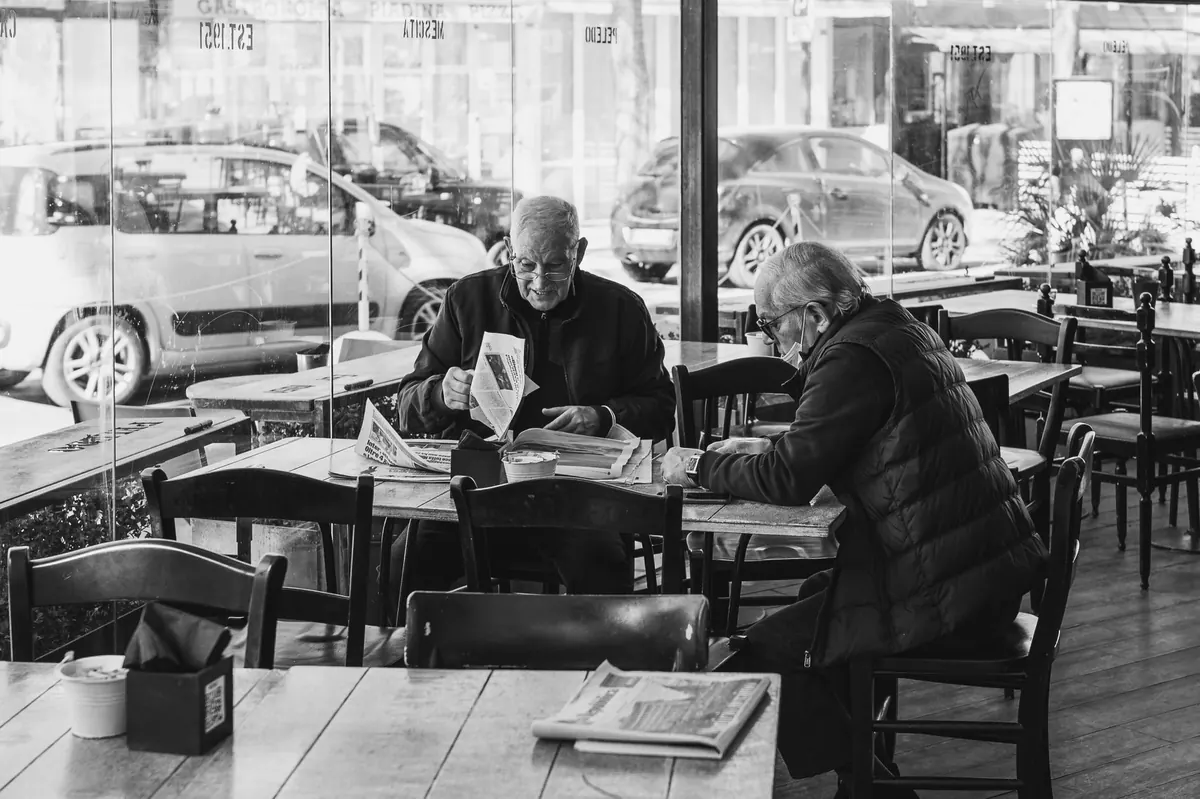
Photo: Paolo Sbalzer / Pexels